Tennessee Governor Enacts Prohibition on Sweepstakes Casino Operations
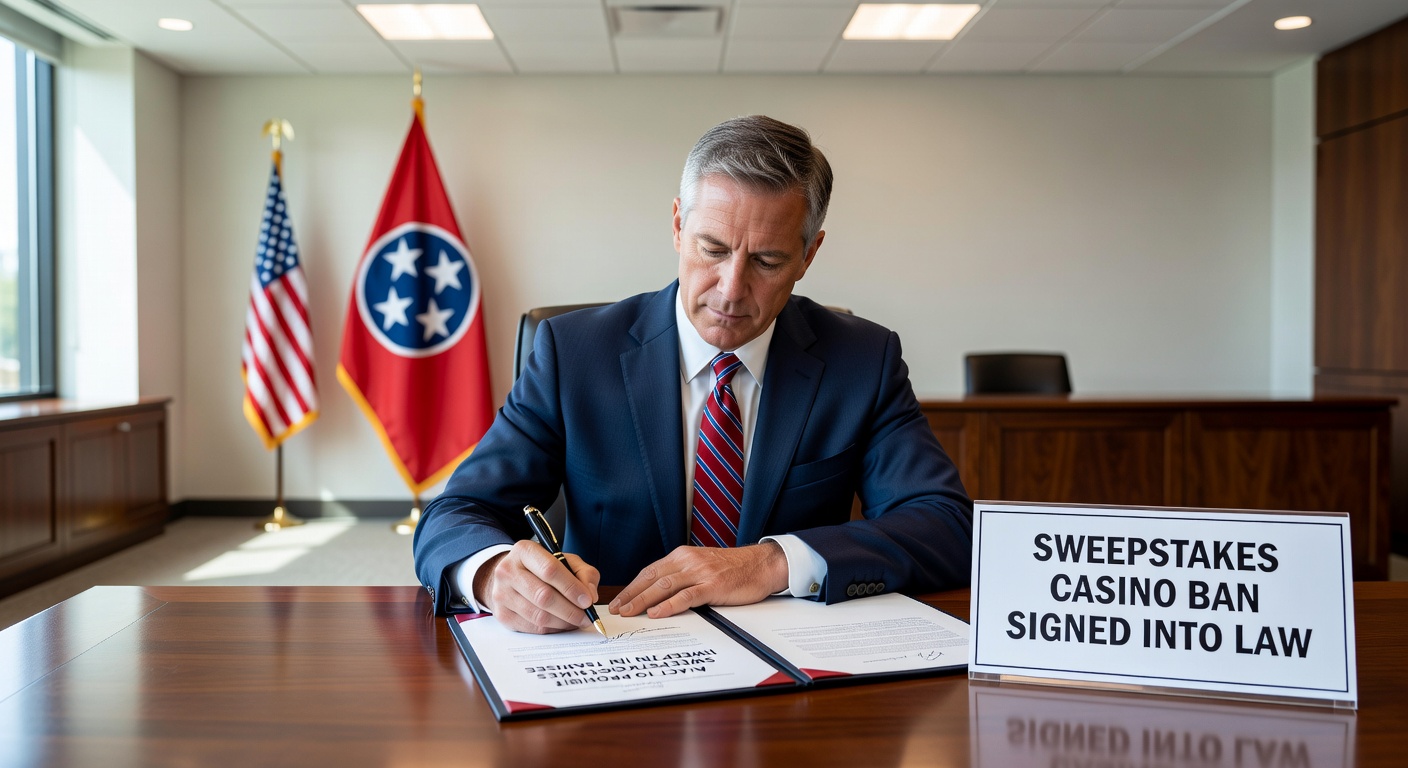
 Tennessee Governor Bill Lee signed legislation that bans sweepstakes casinos across the state, and the measure takes effect as law to prohibit this specific form of gaming while targeting venues that rely on sweepstakes-style promotions to deliver casino-like experiences. The development comes after sustained regulatory examination of such sites, and officials note that the new rules address operations offering games through sweepstakes mechanisms rather than traditional licensing frameworks. State lawmakers advanced the bill through the legislative process earlier this year, and Governor Lee completed the signing in May 2026, which aligns with broader efforts to clarify gaming boundaries in Tennessee. Observers point out that sweepstakes casinos typically operate by selling products or entries that unlock free plays on slots or table games, yet the statute now classifies these activities as prohibited within state lines.
Background on Sweepstakes Operations in the State
Sweepstakes-style gaming expanded in Tennessee over recent years because operators leveraged legal loopholes around promotional contests, and several venues opened in various cities to attract players seeking casino-style entertainment without full regulatory oversight. Data from industry tracking shows these locations generated revenue through entry fees tied to merchandise or internet time sales, while players received chances at virtual reels or poker hands. Yet state regulators increased examinations after complaints about consumer protections and tax compliance surfaced, which prompted the push for clearer prohibitions.
Legislative records indicate the bill defines sweepstakes casinos explicitly and establishes enforcement mechanisms that empower authorities to shut down non-compliant sites, and this approach mirrors actions taken in other U.S. jurisdictions where similar models faced restrictions. Those who've followed the process note that the law avoids impacting licensed charitable gaming or established lottery programs, focusing instead on commercial sweepstakes promotions that replicate casino outcomes.
Key Provisions of the New Legislation
The statute outlines penalties for operators who continue sweepstakes promotions after the effective date, and it grants the Tennessee attorney general authority to pursue civil actions against violators. Enforcement begins immediately following the May 2026 signing, while existing venues receive a transition window to cease operations and liquidate assets without facing immediate fines. Regulatory bodies within the state have already started notifying known operators, and compliance teams prepare guidance documents to help businesses distinguish between permitted promotions and banned activities.
Legal analysts highlight that the measure aligns Tennessee policy with federal interpretations of sweepstakes laws, and it prevents operators from claiming promotional exemptions when games involve cash prizes or substantial player investment. One study from a U.S. gaming research institute revealed that states adopting similar bans experienced measurable shifts in player activity toward licensed alternatives or out-of-state options. The Tennessee Department of Revenue stands to monitor related tax implications, since sweepstakes venues previously contributed through sales taxes on ancillary products.
Regulatory Scrutiny Leading to Action
Scrutiny intensified after multiple audits uncovered inconsistencies in how sweepstakes operators reported revenue and handled player funds, and state officials responded by requesting detailed records from several facilities. According to reports from the National Council of Legislators from Gaming States, such models often blur lines between legal marketing and unlicensed gambling, which creates enforcement challenges across multiple regions. Tennessee's approach draws from examples in neighboring states where courts upheld restrictions on sweepstakes formats, and this precedent supported the rapid passage of the current bill.
Industry associations based in the U.S. have issued statements acknowledging the legislative outcome, and they advise members to review operations for compliance before the law fully activates later in 2026. Those monitoring the sector note that the ban does not extend to online sweepstakes platforms based outside Tennessee, although in-state promotion of such services now falls under prohibited activities. Enforcement will rely on coordination between local law enforcement and state gaming regulators, who share resources to identify remaining operations.
Broader Context for Gaming Policy
Tennessee maintains strict controls on casino-style gaming overall, and the new prohibition reinforces that stance by closing a specific avenue for expansion. Figures from the American Gaming Association indicate that regulated markets in other states generate significant tax revenue through licensed facilities, whereas sweepstakes models historically contributed less due to their ambiguous status. Lawmakers cited these disparities during debates, and the final language reflects a desire for uniform oversight across all gaming formats present in the state.
Stakeholders in adjacent industries, such as hospitality and entertainment venues, watch the transition closely because some locations combined sweepstakes elements with dining or retail experiences. The legislation permits certain limited promotional activities that do not involve direct gaming simulations, and this distinction allows businesses to continue non-gaming sweepstakes tied to product purchases. State agencies plan public education campaigns to inform residents about the changes, and resources will appear on official websites detailing what remains legal versus what the ban eliminates.
Conclusion
The signing by Governor Lee marks a definitive step in Tennessee's gaming regulatory landscape, and the prohibition on sweepstakes casinos takes shape through clear statutory language and enforcement timelines set for 2026. Observers note that similar measures in other U.S. states have prompted operators to adapt business models or relocate, while players redirect attention to fully licensed options. The measure concludes a period of heightened review that began with routine compliance checks and ended with comprehensive legislation addressing the unique structure of sweepstakes promotions.