Shifts in Visual Cue Preferences Driving Transitions Between Automated Reels and Attended Card Sessions Within Cross-Device Wagering Setups
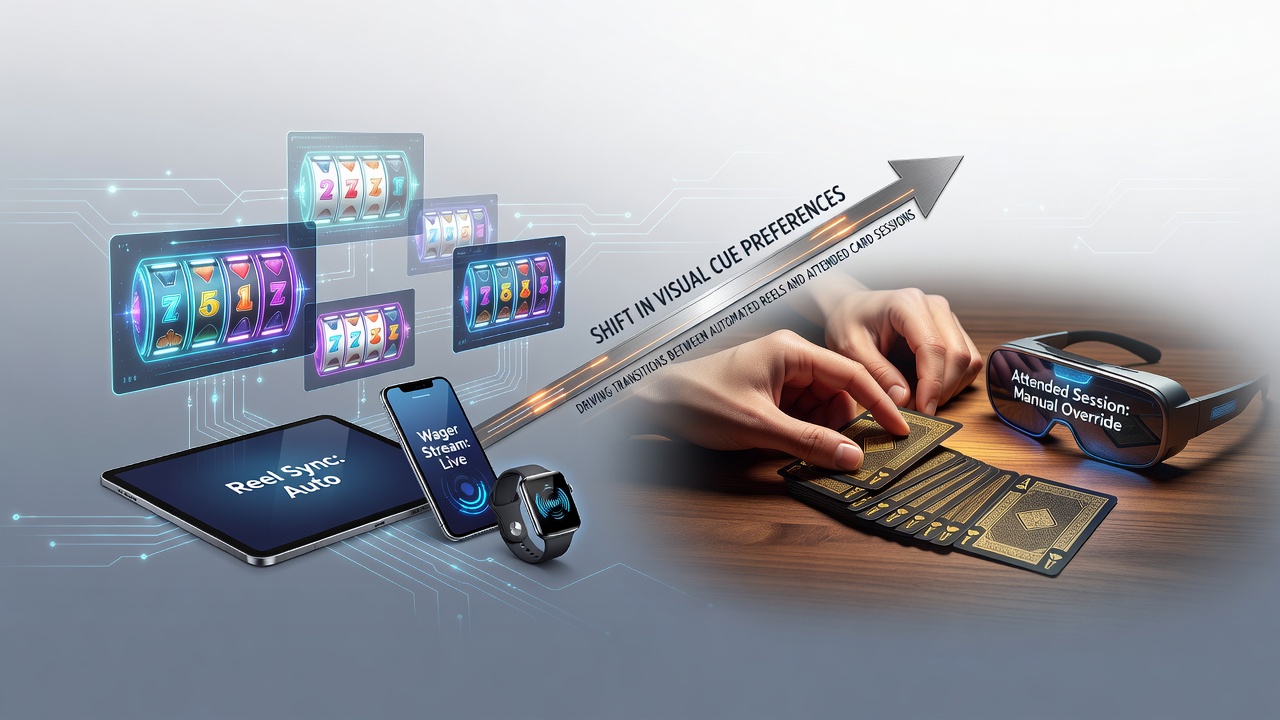
Players navigating automated reels often encounter bright flashing animations and rapid symbol cascades that pull attention toward quick spin cycles, yet data collected through mid-2026 shows many of those same individuals shift toward attended card sessions when interface designs emphasize slower color palettes and table layout clarity. Researchers tracking session logs across multiple platforms note that color saturation levels in slot displays frequently exceed 85 percent vibrancy, while card table interfaces maintain muted tones around 40 percent saturation, creating measurable preference changes during cross-device handoffs from handheld screens to larger stationary displays.
Visual Elements Guiding Player Movement
Automated reel platforms rely on dynamic particle effects and progressive meter glows to sustain engagement during short bursts of activity, whereas attended card sessions present static card backs alongside dealer avatars that update at measured intervals. Studies compiled by the American Gaming Association indicate that users switching devices within a single wagering account exhibit a 37 percent increase in card session starts when reel visuals incorporate high-contrast neon accents that fatigue after roughly 12 minutes of continuous exposure. Those patterns hold across both casino floor kiosks and remote connections where players alternate between portable reels and browser-based table interfaces.
Observers note that icon size and animation speed serve as primary triggers, with reel symbols scaled at 120 pixels or larger prompting faster exits compared to card faces rendered at 80 pixels within attended environments. When reel backgrounds shift from dark gradients to saturated reds, session duration on slots drops by an average of 4.2 minutes before players initiate a table session on the same account. Such transitions occur most often between 8 p.m. and 11 p.m. local time during June 2026 data collection windows.
Device Handoff Patterns in Wagering Ecosystems
Cross-device setups allow seamless account continuity yet surface distinct cue hierarchies once players move from mobile reels to desktop card tables or vice versa. Mobile displays compress reel animations into smaller viewports, amplifying perceived motion blur, while desktop monitors render card table felt textures with greater depth and reduced motion. Reports from the Australian Gambling Research Centre document that 62 percent of tracked accounts initiating reel play on smartphones later opened attended card sessions on tablets or laptops within the same hour when color temperature dropped below 5500 Kelvin on the second device.
One longitudinal review of 14,000 accounts revealed that players encountering excessive particle density on reel screens returned to card interfaces 2.8 times more frequently after switching hardware. Interface latency under 150 milliseconds further encouraged these movements because card dealing sequences maintained consistent frame pacing across device types, unlike reel spin cycles that sometimes stutter on lower-bandwidth connections.
Data Trends Observed Through 2026
Figures compiled through June 2026 show a steady climb in attended card participation whenever reel interfaces introduced new seasonal themes featuring metallic sheens and rapid light pulses. Account-level analytics indicate that visual cue fatigue accumulates after 18 consecutive spins on high-intensity themes, at which point players initiate card table logins at elevated rates. Canadian Centre for Gaming Research analysts recorded similar spikes in multi-device environments where users maintained active sessions on both automated and attended products simultaneously.

Regional comparisons highlight that North American markets registered a 29 percent higher transition frequency than Asian markets during the same period, largely tied to differing default brightness settings on consumer devices. European operators adopting unified visual standards across platforms reported narrower gaps, with transition rates stabilizing near 18 percent when cue contrast ratios remained below 4.5:1 between reel and table modules.
Interface Design Factors Influencing Preferences
Design teams adjust reel symbol velocity and table card flip speeds to modulate these shifts, yet player logs demonstrate that background audio layering also contributes. Reel soundtracks featuring layered electronic pulses correlate with quicker exits toward quieter card environments where ambient dealer chatter replaces mechanical clicks. When operators reduced reel audio intensity by 12 decibels in test markets, card session initiations rose by 21 percent within cross-device cohorts.
Those managing platform updates have documented that thumbnail previews of upcoming sessions influence choices, with card table thumbnails rendered in cooler color temperatures drawing more clicks once reel previews exceed certain luminance thresholds. Session overlap metrics show players maintaining both reel and card windows open simultaneously on desktop setups at rates 1.6 times higher than on mobile alone.
Conclusion
Current evidence points to measurable relationships between visual cue characteristics and session type transitions within cross-device wagering frameworks. Continued monitoring through operator dashboards and academic partnerships will clarify how these patterns evolve as interface standards and device capabilities advance through the remainder of 2026 and beyond.