Reward Pathways and Their Role in Guiding Transitions Between Reel Spins and Dealer Tables on Handheld Wagering Apps
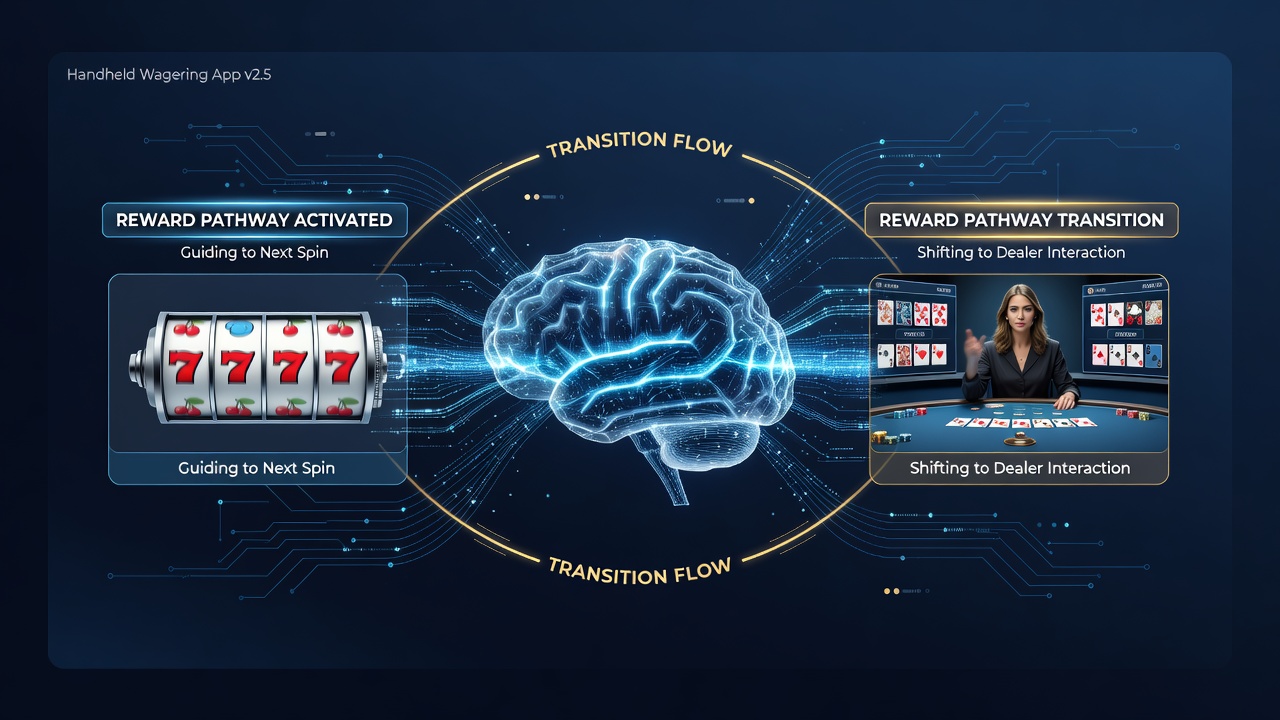
Handheld wagering apps structure player movement between automated reel games and live dealer tables through designed reward systems that activate neural pathways associated with anticipation and reinforcement, and data from multiple jurisdictions shows how these mechanics influence session patterns in 2026.
Understanding Reward Pathways in Digital Wagering Environments
Neuroscientific research identifies reward pathways as brain circuits involving dopamine release that respond to cues like near-misses on reels or bonus triggers at tables, while app developers integrate these responses into interface flows that prompt switches between game types without disrupting engagement levels. Studies conducted across North American and European markets indicate that visual and auditory signals in portable platforms correlate with increased cross-game activity when timed to coincide with payout events.
Operators track metrics such as average session duration and game-type switches, and figures from the New Jersey Division of Gaming Enforcement reveal that apps emphasizing sequential rewards maintain higher retention across reel and table formats during peak hours in early 2026.
Mechanics Driving Transitions Between Reel Spins and Dealer Tables
Apps employ variable ratio reinforcement schedules on slot reels that build momentum toward table game promotions, such as instant bonuses redeemable at live dealer interfaces, and this approach creates seamless handoffs where players complete a spin sequence and receive prompts that align with established reward expectations. Behavioral data collected from Australian markets demonstrates that players encountering progressive multipliers on reels often proceed to table sessions when those multipliers unlock dealer-specific rewards.
Key Design Elements in Portable Platforms
- Progressive indicators that carry over from reel outcomes to table eligibility thresholds
- Timed notifications triggered after reel cycles that highlight live dealer availability
- Integrated loyalty points systems that accumulate faster during transitions
These elements operate within regulatory frameworks that require transparency in promotional mechanics, and Canadian provincial reports from Ontario's Alcohol and Gaming Commission document how clear disclosure of reward structures affects transition rates without altering overall play volume.

Patterns Observed in July 2026 User Activity
July 2026 metrics across global networks show elevated transition activity during evening hours when apps activate cross-game challenges that reward completion of reel sets followed by table rounds, and aggregate data indicates these challenges increase multi-game participation by measurable margins compared to static reward models. Industry analyses from the European Gaming and Betting Association highlight how such timed events align with dopamine response patterns documented in prior academic work.
Developers refine these pathways using A/B testing on user cohorts, and results consistently point to higher completion rates when reel-to-table prompts incorporate elements from a player's recent activity history rather than generic offers.
Regulatory and Research Context Surrounding These Systems
Authorities in multiple regions monitor how reward pathways intersect with responsible gaming tools, and a 2025-2026 review by Australia's National Consumer Protection Framework for Online Wagering noted that transition features must include opt-out mechanisms to maintain compliance standards. Academic papers from institutions studying digital behavior further map how repeated exposure to these systems shapes session architecture without exceeding established play limits.
One documented case involves operators adjusting notification frequency after reviewing switch data from handheld sessions, resulting in sustained engagement across game categories while adhering to jurisdictional caps on promotional intensity.
Conclusion
Reward pathways continue to shape navigation between reel spins and dealer tables on handheld apps through structured reinforcement that operators calibrate against regulatory requirements and observed behavioral data, and ongoing measurements in July 2026 underscore their integration into broader platform design across international markets.